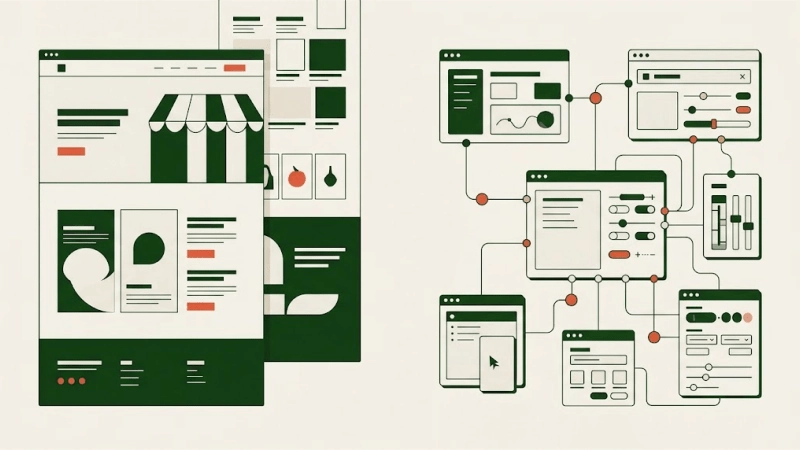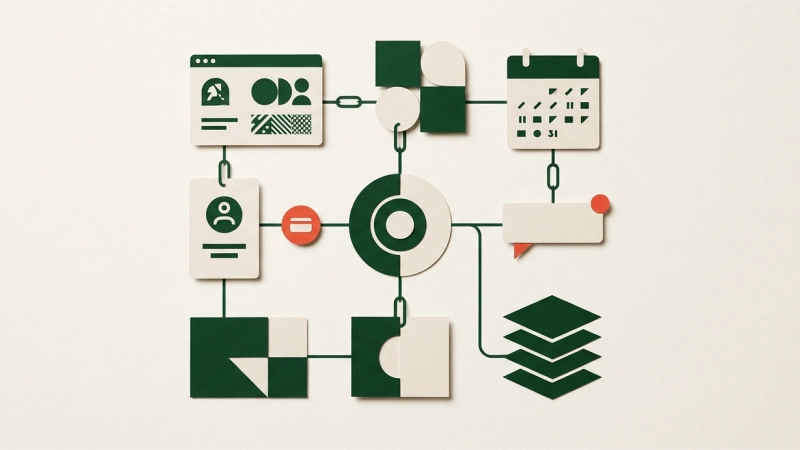
A digital product can look simple from the outside.
Open the app. Click a button. Get the result.
What you don’t see is everything underneath it.
The research.
The decisions.
The user flows.
The interface.
The database.
The integrations.
The testing.
The things that broke along the way.
Building a digital product isn’t simply a matter of writing code.
It’s a process of turning a problem into something people can actually use.
1. Start with the problem
The first question shouldn’t be:
“What should we build?”
It should be:
“What problem are we solving?”
This sounds obvious, but it’s one of the easiest steps to skip.
A product idea might sound exciting while solving a problem that nobody really has—or one that people aren’t willing to solve using your product.
Good products start with a real need.
2. Understand the people using it
You don’t design a product for “everyone.”
Different people have different expectations, technical abilities and priorities.
A customer using your product on a phone while standing in a queue is in a very different situation from an employee using the same system from a desktop in an office.
Understanding the user affects almost every decision that follows.
3. Define the first version
You don’t need every feature on day one.
In fact, trying to build everything at once can make a product slower, more expensive and harder to validate.
Define the minimum useful version.
What does the product absolutely need to do for someone to get value from it?
Build that first.
Then learn.
4. Map the experience
Before designing screens, map what the user actually needs to do.
For example:
Create account → choose service → enter information → make payment → receive confirmation
That’s a user flow.
It sounds simple, but mapping it out exposes problems before development begins.
Good product design often involves removing steps rather than adding them.
5. Design the interface
Now we get into what people usually think of when they hear “design.”
The colours.
Typography.
Buttons.
Cards.
Navigation.
Layouts.
But good product design isn’t decoration.
It’s about helping someone understand:
Where am I?
What can I do here?
What happens if I click this?
What should I do next?
A beautiful interface that confuses people is still a bad interface.
6. Build the product
This is where the design becomes functional software.
Depending on the product, that might involve:
- frontend development
- backend development
- databases
- APIs
- authentication
- payments
- notifications
- third-party services
- analytics
- security
The technology depends on the product.
There is no single stack that is automatically right for everything.
7. Test it with real people
Developers can test whether something works.
Real users can show you whether it makes sense.
Those aren’t the same thing.
Someone who has never seen your product may click something you assumed was obvious and completely miss what you intended.
That’s useful information.
Testing isn’t about proving that your design is perfect.
It’s about discovering where it isn’t.
8. Launch—and keep learning
Launch day isn’t the finish line.
It’s the beginning of the product’s real life.
Once people start using it, you’ll discover:
- which features people actually use
- where they get stuck
- what they ignore
- what they ask for
- what breaks under real usage
That information should influence what happens next.
The best products evolve
There is a temptation to think that a digital product should emerge from development fully formed.
Realistically, the best products evolve.
Version 1 solves the core problem.
Version 2 removes friction.
Version 3 becomes faster, smarter or more useful.
And sometimes the biggest improvement is deleting something nobody needed.
Build less. Learn more.
The goal isn’t to produce the most software.
It’s to create something useful.
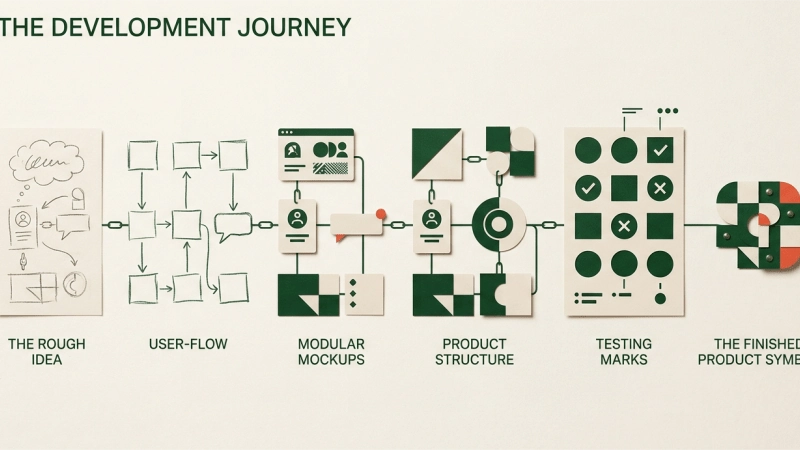
That’s why a good digital product process moves from problem → users → scope → experience → technology → testing → iteration.
At NUMBER 54, we believe the technology should serve the idea—not the other way around.
Because nobody gets extra points for building something complicated when a simpler product would have done the job.