Choosing a web designer can be surprisingly difficult.
Everyone has a website.
Everyone has a portfolio.
Everyone says they’re creative.
And everyone seems to promise that your new website will “take your business to the next level.”
So how do you actually choose?
Start by looking beyond the screenshots.
1. Look at the work
This sounds obvious, but look closely.
Don’t just ask whether the websites are attractive.
Ask:
Does the work feel appropriate for the businesses?
Are the projects actually live?
Can you see different types of work?
Does the designer solve different problems, or do all their websites look like the same template with different colours?
A portfolio should tell you something about how someone thinks.
2. Find out whether they understand your business
You shouldn’t need to explain the entire internet to your web designer.
They should ask questions.
Who are your customers?
What do you sell?
What makes you different?
What is the website supposed to achieve?
What isn’t working currently?
A designer who starts with “Which colour do you want?” may be starting too far down the process.
3. Ask how they approach content
Websites need words.
A lot of businesses underestimate this.
If your designer expects you to hand over perfect copy for every page without guidance, find out what support is available.
At minimum, there should be a clear plan for what content is required.
4. Ask what’s actually included
“Website” can mean wildly different things.
Does the price include:
- design?
- development?
- mobile optimisation?
- CMS?
- copywriting?
- SEO basics?
- hosting?
- domain?
- analytics?
- forms?
- integrations?
- training?
- maintenance?
Get the scope in writing.
A cheap quote can become expensive when every missing feature becomes an extra charge.
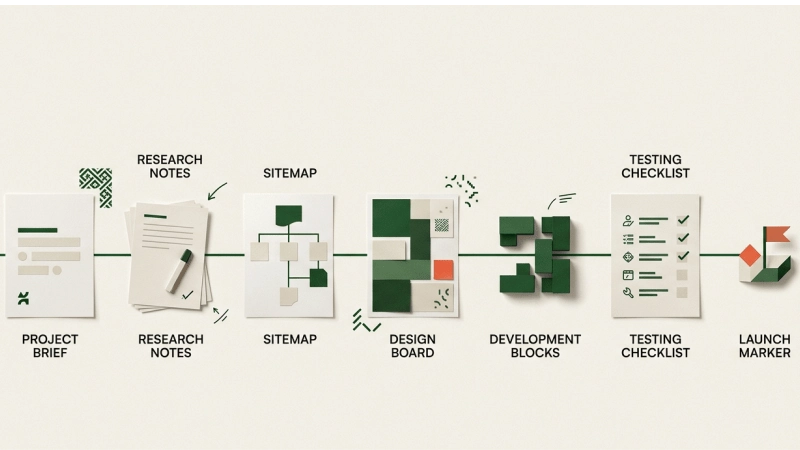
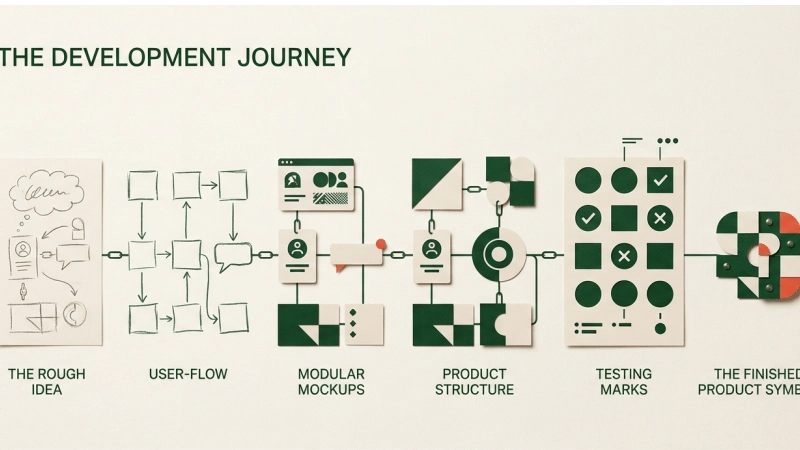
5. Understand the process
Ask what happens after you pay.
What are the stages?
When do you review the design?
How many revision rounds are included?
How long does the project usually take?
What do you need to provide?
A clear process is one of the easiest ways to avoid misunderstandings.
6. Ask who actually does the work
Some studios design everything internally.
Some outsource development.
Some use freelancers.
Some use templates.
None of these approaches is automatically good or bad.
The important thing is knowing what you’re paying for and who is responsible for delivering it.
7. Don’t choose entirely on price
Price matters.
But comparing two website quotes purely by the number at the bottom is rarely useful.
You’re comparing scope, thinking, design, development, communication, support and expected outcomes—not just hours of labour.
Two websites that both cost “₦X” can represent completely different projects.
8. Pay attention to communication
This is underrated.
Do they answer questions clearly?
Do they explain technical decisions in plain language?
Do they tell you when something isn’t a good idea?
Do they communicate when something changes?
You’re not just buying a website.
You’re entering a working relationship.
9. Beware of guaranteed results
Nobody can honestly guarantee that a new website will immediately make your business successful.
There are too many variables.
Your offer.
Your market.
Your pricing.
Your traffic.
Your sales process.
Your competition.
Your marketing.
A good web designer can build the right foundation.
They cannot control everything that happens after someone visits the site.
10. Choose someone who can tell you “no”
This might be the most useful test.
If you ask for a feature that doesn’t solve the problem, will your designer blindly build it because you asked?
Or will they explain the trade-off and suggest a better approach?
You don’t need someone who agrees with everything.
You need someone who understands what you’re trying to achieve.
The right question isn’t “Who makes the prettiest websites?”
It’s:
“Who understands what I need this website to do?”
A website is too important to choose entirely from a gallery of screenshots.
Look at the work.
Ask about the process.
Understand the scope.
Talk about the business.
Then choose based on the whole picture.
The right website project should feel like a collaboration—not a transaction.